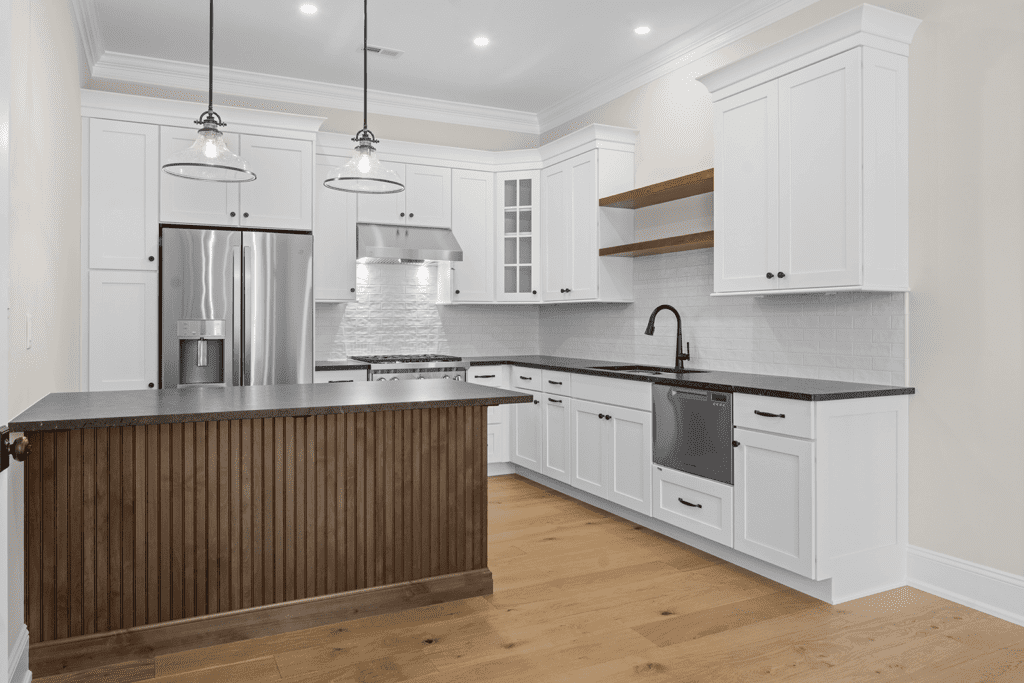
Open-concept kitchens have transformed how we live and entertain but they’ve also raised the bar for design. Clean lines, minimal clutter, and seamless flow are now expected. At the same time, homeowners still need practical spaces for prep, storage, and everyday mess.
That’s where the hidden butler’s pantry and hidden scullery kitchen come in.
Through thoughtful cabinetry and architectural design, they’re being integrated so naturally into the kitchen that they feel invisible when closed, yet incredibly functional when in use.
What Is a Hidden Pantry or Scullery Kitchen?
A butler’s pantry traditionally serves as a transitional space between the kitchen and dining area, often used for storage, staging, or entertaining support. A scullery kitchen, on the other hand, is a secondary prep space, designed for cooking, cleaning, and housing appliances.
Today, both are being reimagined as concealed extensions of the main kitchen.
A hidden butler’s pantry or hidden scullery kitchen allows homeowners to:
- Keep prep areas and appliances out of sight
- Maintain a polished, uncluttered kitchen aesthetic
- Improve workflow without sacrificing design
For inspiration on how these spaces function, our article on crafting a timeless butler’s pantry explores how form and function come together.
Why Concealed Storage Is Trending
Modern luxury kitchens prioritize simplicity, but real life still requires storage, prep zones, and flexibility.
That’s why kitchens with a hidden scullery or concealed pantry are becoming a defining feature in high-end homes. Instead of removing functionality, designers are relocating it behind the scenes.
This approach:
- Reduces visual clutter
- Enhances architectural flow
- Keeps entertaining spaces clean and inviting
- Allows for more flexible, high-performance kitchen layouts
As highlighted in custom cabinetry trends for 2026, integrated and concealed storage is one of the most influential shifts in modern kitchen design.
Creative Ways to Conceal a Butler’s Pantry or Scullery
There are many ways to achieve a seamless look. The key is making the entry point feel like part of the cabinetry—not a separate doorway.
1. Flush Cabinetry Panels
One of the most popular techniques is using full-height cabinet panels that match the surrounding kitchen. When closed, the pantry door disappears into the wall of cabinetry.
This works especially well with inset or frameless cabinetry styles, which you can explore in our guide to cabinetry overlays.
2. Integrated Panel Doors
Panel-ready doors allow pantry or scullery entrances to blend seamlessly with adjacent cabinets.
This technique is often paired with appliance integration strategies so that both appliances and secondary spaces remain visually unified.
3. Pocket or Sliding Doors
Pocket doors that tuck away into the wall are ideal for a hidden scullery kitchen. They provide full access when open and disappear completely when closed.
Sliding doors, especially with wood or glass finishes, offer a softer transition while still maintaining concealment.
4. Hidden Entryways Within Millwork
Custom millwork can conceal entire entryways. This might include:
- A pantry door disguised within a tall cabinet run
- A scullery entrance hidden behind a paneled wall
- Built-in cabinetry that opens with touch-latch hardware
This approach requires precision planning, which is why working with a team experienced in custom cabinetry design is essential.
5. Appliance Garages and Internal Concealment
Not all concealment requires a separate room. Smaller features, like appliance garages or pull-out stations, can hide clutter within the main kitchen itself.
Combined with integrated lighting, as shown in this guide, these solutions keep everyday tools accessible but out of sight.
Custom vs. Semi-Custom Approaches
Both custom cabinetry and semi-custom cabinetry can achieve concealed pantry designs.
- Fully custom cabinetry allows for complete control, ideal for hidden entryways, architectural millwork, and complex layouts.
- Semi-custom cabinetry provides a strong foundation that can be enhanced with custom panels, doors, or trim details.
- Blended approaches combine both, offering flexibility without sacrificing design cohesion
If you’re comparing options, our overview of custom vs. pre-made cabinetry and what custom cabinetry really means can help guide your decision.
Balancing Accessibility and Aesthetics
Concealment should never come at the expense of usability.
A well-designed hidden scullery or modern butler pantry remains:
- Easy to access
- Intuitive to navigate
- Efficient for prep and cleanup
Designers achieve this balance by carefully planning:
- Door placement and swing direction
- Workflow between kitchen and pantry zones
- Lighting and visibility inside concealed spaces
- Storage layout based on daily habits
As discussed in how custom cabinets improve kitchen workflow, thoughtful planning ensures that hidden spaces enhance, not complicate, the way you use your kitchen.
Designed to Disappear, Built to Perform
The beauty of a concealed pantry or scullery lies in its dual purpose.
From the outside, it contributes to a clean, refined kitchen aesthetic.
Behind the scenes, it delivers powerful functionality, supporting cooking, storage, and organization.
At Bucks County Cabinetry and Design, our design team works closely with homeowners, builders, and designers to create these seamless solutions. Whether you’re planning a modern butler pantry or exploring scullery kitchen ideas, we tailor each project to your space and lifestyle.
Explore our gallery or featured projects to see how concealed spaces come to life in real homes.
A Refined Kitchen, Without Compromise
A hidden butler’s pantry or hidden scullery kitchen offers the best of both worlds:
- A clean, minimalist main kitchen
- Expanded storage and prep space behind the scenes
With the right design approach, these spaces don’t feel hidden, they feel intentional.
If you’re ready to explore what’s possible, learn more about who we serve or contact us to begin your project.
Because great design isn’t about hiding functionality.
It’s about integrating it so seamlessly, you never have to think about it.