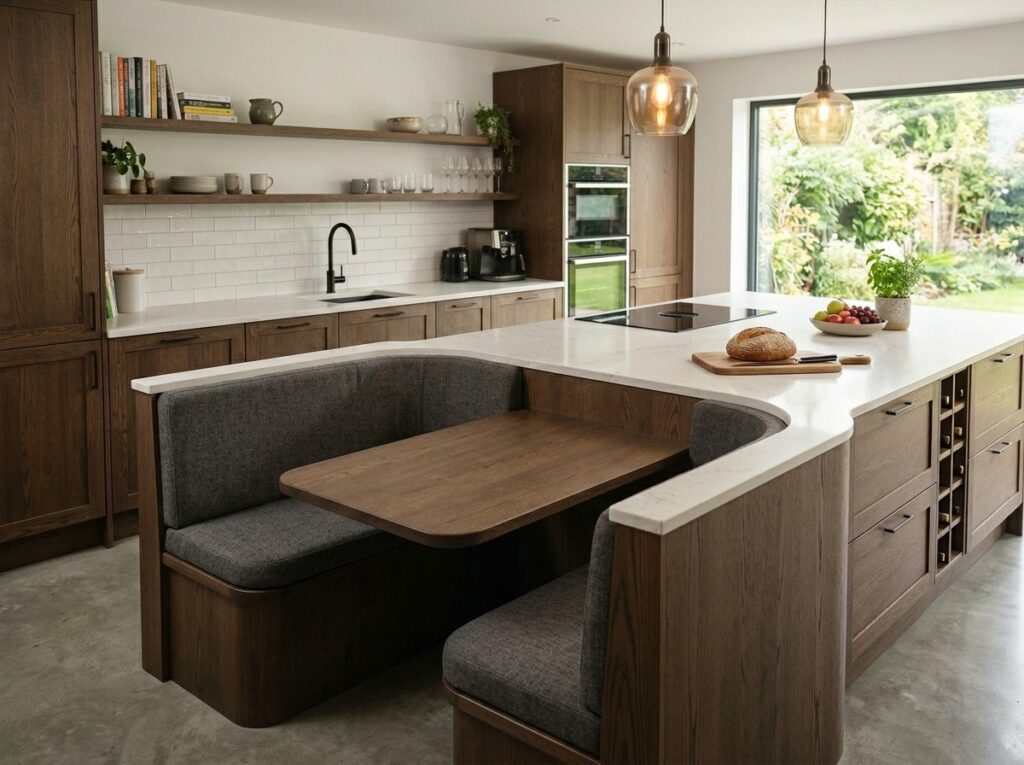
The kitchen island has evolved far beyond its original purpose as an extra work surface. Today, many homeowners are embracing the Furniture-Style Kitchen Island, a design approach that blends the warmth and character of fine furniture with the functionality of modern cabinetry.
Unlike traditional islands that simply mirror surrounding cabinets, furniture-inspired islands are designed to stand out. They introduce architectural interest, custom detailing, and a sense of craftsmanship that transforms the island into the visual centerpiece of the room. At the same time, they must still support the way a kitchen functions every day.
The most successful furniture-style islands strike a careful balance between beauty and practicality, creating a space that feels welcoming, purposeful, and uniquely personal.
What Defines a Furniture-Style Kitchen Island?
A Furniture-Style Kitchen Island borrows design cues from freestanding furniture rather than standard cabinetry.
Common features include:
- Decorative legs or turned posts
- Furniture-inspired millwork and paneling
- Contrasting paint or wood finishes
- Open shelving or display areas
- Custom hardware and decorative accents
- Furniture-style toe kicks or elevated bases
These details help the island feel less like a built-in cabinet run and more like a handcrafted piece that has been thoughtfully placed within the room.
As discussed in our article on custom cabinetry trends for 2026, homeowners are increasingly seeking design elements that add warmth, personality, and architectural character while maintaining timeless appeal.
Why Furniture-Inspired Islands Are Trending
Today’s kitchens are no longer just places to prepare meals. They serve as gathering spaces, homework stations, entertainment hubs, and informal dining areas.
As a result, homeowners want islands that feel more inviting and integrated into the home.
A furniture-inspired island helps soften the kitchen by introducing:
- Rich wood textures
- Contrasting finishes
- Decorative craftsmanship
- Visual warmth
Rather than looking purely utilitarian, the island becomes a natural extension of the home’s overall design.
Whether you’re creating a modern renovation or a transitional kitchen, a thoughtfully designed island can help bridge the gap between function and comfort.
Balancing Beauty and Functionality
While aesthetics are important, a beautiful island must still work hard.
One of the first considerations is storage.
A well-designed functional kitchen island may include:
- Deep drawers for cookware
- Pull-out trash and recycling storage
- Specialty organizers
- Hidden charging stations
- Storage for entertaining essentials
For many homeowners, maximizing storage is just as important as creating visual impact. Our guide to kitchen cabinet storage ideas explores several ways custom cabinetry can improve everyday functionality.
The best islands make these practical features virtually invisible while maintaining a refined appearance.
Seating, Traffic Flow, and Everyday Use
A furniture-style island often serves as the social center of the kitchen.
When planning seating, it’s important to consider:
- How many people will regularly use the space
- Sight lines throughout the room
- Walking paths around the island
- The relationship between prep areas and gathering zones
An island that looks stunning but disrupts circulation can quickly become frustrating to use.
That’s why our design process begins by understanding how each homeowner lives, cooks, and entertains. Every layout decision is made with real-world functionality in mind.
Contrasting Finishes Create Character
One hallmark of a Furniture-Style Kitchen Island is contrast.
While perimeter cabinetry may be painted in a soft neutral, the island often introduces:
- Warm walnut or white oak finishes
- Deep navy or charcoal paint
- Decorative metal accents
- Natural stone surfaces
These contrasts help establish the island as a focal point while maintaining harmony with the rest of the kitchen.
Our recent article on warm wood tones explores how natural materials are helping homeowners create kitchens that feel both modern and inviting.
Appliance Integration and Hidden Functionality
Today’s islands often do far more than provide storage and seating.
Many include:
- Beverage refrigerators
- Microwave drawers
- Secondary sinks
- Dishwashers
- Charging stations
Thoughtful appliance integration allows these conveniences to disappear behind custom panels and millwork, preserving the furniture-inspired appearance while enhancing functionality.
The result is a cleaner, more sophisticated design that doesn’t sacrifice convenience.
Custom vs. Semi-Custom Design Options
Both custom and semi-custom cabinetry can be used to create a furniture-inspired island.
A fully custom island allows complete control over:
- Dimensions
- Materials
- Decorative detailing
- Storage configuration
- Finish selections
Semi-custom solutions offer a curated framework that can be enhanced with:
- Decorative end panels
- Custom paint finishes
- Furniture-style legs
- Unique hardware selections
As discussed in our article on blending custom features into a semi-custom design, many homeowners find that a hybrid approach delivers the perfect balance of personalization and value.
The Island as the Heart of the Kitchen
The most successful kitchen islands do more than support cooking tasks.
They become:
- Gathering spaces for family and friends
- Visual anchors for open-concept layouts
- Expressions of personal style
- Functional workstations that improve daily life
When thoughtfully designed, a Furniture-Style Kitchen Island feels like it has always belonged in the home. It complements the surrounding architecture, supports the way the family lives, and adds a level of craftsmanship that elevates the entire space.
At Bucks County Cabinetry and Design, we believe the best islands combine beauty, functionality, and thoughtful design. Whether you’re exploring a fully custom solution or a carefully tailored semi-custom approach, our team works closely with homeowners to create islands that become the true centerpiece of the kitchen.
Because the best islands aren’t just workspaces, they’re where life happens.