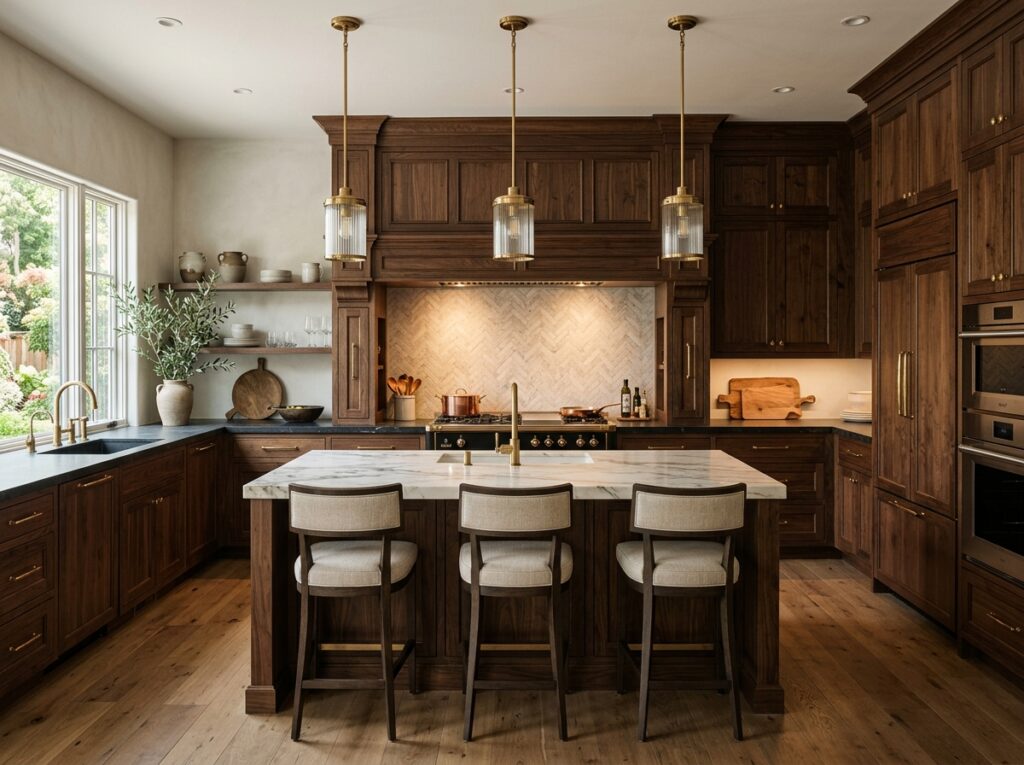
Luxury kitchens today are designed to feel less like workspaces and more like beautifully crafted living areas. One design feature that has become increasingly popular is the range alcove—a built-in architectural niche that transforms a standard cooking area into a custom focal point.
Whether you’re planning a complete kitchen renovation or exploring custom cabinetry ideas, understanding how a range alcove works can help you create a kitchen that’s both functional and timeless.
What Is a Range Alcove?
A range alcove is a recessed area designed to house a range hood, cooktop, or range. Instead of installing an exposed hood on a flat wall, the ventilation system is integrated into a custom-built architectural niche surrounded by cabinetry, millwork, plaster, stone, or decorative woodwork.
Often referred to as a stove alcove or kitchen stove alcove, this design creates the appearance of furniture rather than an appliance, helping the cooking zone feel intentionally integrated into the rest of the kitchen.
Homeowners exploring custom kitchen designs will often notice that range alcoves are a defining feature of many luxury kitchens because they combine beauty with practicality.
What Is the Purpose of a Range Alcove?
Beyond housing a kitchen vent, a range alcove serves several important purposes.
It can:
- Create an architectural focal point
- Conceal portions of the ventilation system
- Frame the cooking area with custom cabinetry
- Improve visual balance throughout the kitchen
- Add valuable storage around the cooking zone
Because the surrounding cabinetry is custom designed, homeowners can incorporate spice pull-outs, utensil storage, appliance garages, or decorative shelving that enhances both form and function. Thoughtful layouts like these are often developed during a custom kitchen design process, where cabinetry and workflow are planned together from the beginning.
How Is a Range Alcove Different from a Traditional Range Hood?
Traditional wall mount range hood or ceiling mounting range hood installations leave the ventilation system exposed as a standalone feature.
A custom alcove range, on the other hand, integrates the hood into the cabinetry itself.
| Traditional Range Hood | Range Alcove |
| Exposed hood | Built into recessed niche |
| Minimal architectural detailing | Surrounded by cabinetry and millwork |
| Functional focal point | Architectural centerpiece |
| Limited storage integration | Cabinetry and storage designed together |
The result is a more cohesive kitchen that feels custom built rather than assembled from individual components.
Why Are Range Alcoves Popular in Luxury Kitchens?
Luxury kitchens emphasize craftsmanship, symmetry, and timeless design.
A range alcove helps achieve all three.
Because it blends ventilation into the architecture, the kitchen feels cleaner, more intentional, and less appliance-focused.
Many homeowners who invest in custom cabinetry choose an alcove because it creates a built-in appearance that enhances both daily living and long-term home value.
What Materials Can Be Used Around a Range Alcove?
One of the biggest advantages of a range alcove is its design flexibility.
Popular material choices include:
- Painted wood cabinetry
- Natural stained wood
- Decorative plaster
- Stone surrounds
- Brick accents
- Custom millwork
- Decorative paneling
These materials can be coordinated with surrounding cabinetry to create a unified design. Homeowners seeking inspiration often browse completed projects and gallery collections to explore how different materials complement various kitchen styles.
How Can Custom Cabinetry Improve a Range Alcove?
Custom and semi-custom cabinetry allows the entire cooking zone to be designed around the homeowner’s lifestyle rather than around standard cabinet dimensions.
Features frequently incorporated include:
- Spice pull-outs beside the range
- Hidden utensil storage
- Appliance garages
- Floating display shelves
- Decorative end panels
- Vertical tray storage
These thoughtful details help maximize every inch of space while maintaining visual symmetry. Even homeowners considering semi-custom cabinetry can often incorporate many of these personalized features through a blended cabinetry approach.
Which Range Alcove Style Is Right for Your Kitchen?
A range alcove can be designed to complement virtually any aesthetic.
Traditional
- Rich stained wood
- Decorative crown molding
- Raised panel cabinetry
- Furniture-inspired detailing
Transitional
- Clean shaker cabinetry
- Mixed wood and painted finishes
- Simple millwork
- Timeless proportions
Modern
- Flat-panel cabinetry
- Minimal trim
- Hidden ducted range hood integration
- Streamlined finishes
Regardless of style, successful designs begin with cabinetry that is planned alongside the architecture. This collaborative approach is one reason many homeowners choose to work with experienced custom cabinet designers early in the renovation process.
Should You Choose a Ducted or Ductless Range Hood?
Both options can work within a range alcove.
- A ducted range hood typically provides stronger ventilation by exhausting cooking fumes outdoors, making it the preferred choice for avid cooks.
- A ductless range hood uses filters to recirculate air back into the kitchen and may be suitable where exterior venting isn’t practical.
Your cabinetry designer can coordinate the alcove dimensions to accommodate either system while maintaining a seamless built-in appearance.
Final Thoughts
A range alcove is much more than a decorative surround for a range hood. It is an architectural feature that anchors the kitchen, enhances storage, and creates a refined built-in aesthetic that feels uniquely tailored to the home.
When paired with thoughtfully designed custom or semi-custom cabinetry, a range alcove becomes both a functional workspace and one of the most striking elements in the entire kitchen. By planning the cabinetry, millwork, and ventilation together from the outset, homeowners can achieve a timeless design that balances beauty, efficiency, and lasting value.